Showing posts with label portugal. Show all posts

Aug 1, 2012

Portugal: Part 4 - The Rest

My fourth day in Lisbon was the start of what brought me to Portugal in the first place. It was time to get to work, but I don't want to bore you with the details of that. Instead, I will just stick to the fun stuff.

As I mentioned before, bacalhau is the national dish of Portugal. This is what the product looks like as it is sold from a bacalhau shop.


The literature that I read over the course of my studying about Portugal suggests that the Portuguese are a synchronic culture, meaning that they view the past, present and future as being interconnected, so it is not surprising that their past is symbolized in much of their arts and architecture. For example, the street lamps in Lisbon show a boat with two ravens.

Lisbon street lamp

Every guidebook I read claims that a ride on tram 28 is a "must do" on a first time visit to Lisbon. Even Bourdain doesn't poopoo it. I felt weird riding public transportation just to ride public transportation, but one day I found myself actually needing to use it. I love how the trams remind us of just how old Lisbon is.


I spent some time at the Castelo de Sao Jorge one evening, taking in the beautiful views of the city. The red tiled roofs were a common sight throughout the country. This castle dates from the Moorish times and sits in a strategic position at the top of a hill overlooking Lisbon.

View of Lisbon from Castelo de Sao Jorge

The second half of my trip in Portugal was spent in the north, near the city of Porto. One evening, I had some free time so I went to some of my fellow conference attendees to Porto. We nearly died in a taxi but that is a different story. Porto is, of course, famous for producing port wine. The port wine houses line the Rio Douro in the city of Vila Nova de Gaia.

Sandeman Cellars

Traditionally, boats called rabelos were used to transport the port wine barrels down the Rio Douro, and they can still be seen on the river today.

Rabelos in the Rio Douro

I wanted to spend some more time in Porto, so I spent a night in the heart of the city. A landmark that can be seen around the city is Torre de Clerigos, a bell tower which is a part of a church.

Torre de Clerigos

While I never eat McDonald's at home anymore, I had to visit the Imperial McDonald's in Porto. It sits on Porto's main square, Praca de Liberdade and is super fancy.

You can barely see it in this photo but the sign does say "Imperial McDonald's"
The counter at Imperial McDonald's

I still couldn't get enough of the Portuguese tiles. Even the train station is heavily decorated with them. This is the train station I arrived in when I returned from the conference to Porto.

Sao Bento train station

In the afternoon, I found myself wandering about. Sometimes I have a plan of attack and sometimes I just find myself walking towards whatever catches my eye. What caught my eye was Porto's cathedral. It was no longer open for the day, so I didn't get to see what the interior looks like. 


Still, it was worth it. The best part was the terrace of the cathedral, which offers great views of the Rio Douro and Vila Nova de Gaia. If you look closely, you can see all of the signs of the Port wine houses.


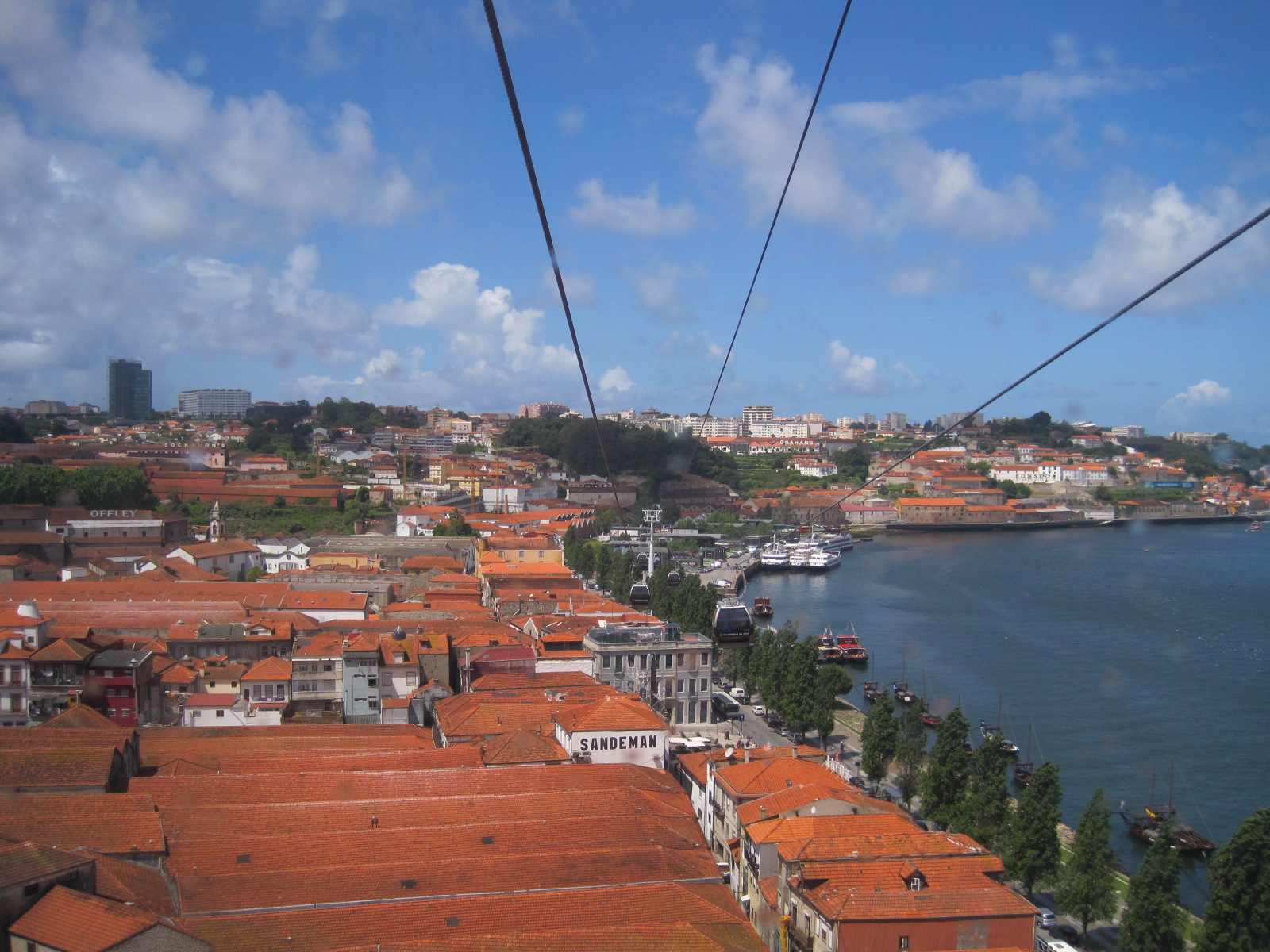
On my last day, I also took a ride on the teleferico. This made me fall in love with the red roof tiles even more!

That's all of Portugal that I have for you! If you ever get a chance, I highly recommend making the journey to Portugal. It is a beautiful country full of warm people, delicious food and it is quite affordable compared to the rest of continental Europe.

You might also like:
Portugal: Part 1 - Obrigada: the only word I learned
Portugal: Part 2 - Kicking it old school in Belem
Portugal: Part 3 - Cold and Rainy in Sintra

Jul 25, 2012

Portugal: Part 3 - Cold and Rainy in Sintra

My last free day was spent in a drizzly, windy and tourist-filled town called Sintra. Don't get me wrong, it was still beautiful, and I saw things that aren't even close to anything I've ever seen before.

Sintra is a very easy 30-minute train ride from Rossio Station in the center of Lisbon to the last stop on the Sintra line. This area used to be a summer retreat for royalty and the aristocracy, so the city is littered with huge mansions and estates plus a few palaces.

Rossio Station

The Portuguese transportation system is very modern, probably due to the infusion of EU money in the last few years. However, it seemed to me that most of the tourists still opted to participate in tourbusapalooza because this was the only place during my whole trip that was overrun with tourists.

When the train pulled into the station at Sintra, I knew it was going to be a wet and unpleasant day, weather-wise. It wasn't raining hard so I decided to take the 10 minute walk into the center of town. Along the walk, you can already see Sintra National Palace (Palacio Nacional de Sintra) topped with Madonna's Jean-Paul Gaultier cone bra.

Sinta National Palace

Plus, the street leading into town is lined with sculptures like this:

Heart sculpture on the way to Sintra ville

The Sintra National Palace was my first stop. It is the only remaining royal palace from the Middle Ages. One of the unique things about the palace is that many of the rooms have their own themes.

The Swan Room was used for banquets and other functions and is beautifully decorated with white and green tiles, animal shaped tureens and a ceiling painted with swans (of course).


The Magpie Room has a ceiling that is decorated with magpies but I found this intricately tiled wall and fireplace to be most stunning.


Many of the windows of the palace presented views of the Moorish Castle, which I would visit later on in the day.


The piece de resistance was the Stag Room. It was absolutely exquisite, decorated floor to ceiling with blue and white tiles and painted coats of arms and stags. It was also overrun with tour groups. I patiently waited until the tour groups cleared out, giving me a few minutes to enjoy the room with only a few other travelers. Of course, another tour group quickly descended upon the room.


One of my main goals of this trip to Portugal was to see some examples of Moorish architecture. I was in luck because the chapel of the palace was done in Moorish style.


While there were many more rooms I wish I could share with you, I will leave the palace at the kitchen. This place was huge and stark. Guess the royals need a lot of space to feed the richies.


The dreary weather was getting to me at this point so I gave up on trying to wander around looking for something good to eat. Instead, I opted for something quick and sugary. Cafe a Piriquita is famous for their travesseiros. Travesseiro translates to pillow, which is appropriate for me because I love my pillows. They are almond and egg custard filled flaky goodness. I grabbed a couple of pastries and a drink and was on my way to my next spot.

Piriquita
Travesserio

I had originally had grand plans to do a lot of walking but my feet were cold and my nose was runny so I took the bus, waiting with the rest of the tourist folk. My destination was Castelo dos Mouros (Castle of the Moors). The castle is more fort than what one normally thinks of as a castle, and it castle dates back to the 9th century and offers panoramic views of the city along its high, winding walls.


While the views were remarkable, I had thoughts of the winds whipping me off a ledge, so I wound up cutting my visit to the castle short.

Does it look windy to you?


The castle also gave me a peek at the prime real estate that exists in Sintra. Look at all of the big houses! More like mini castles.


My final sight in Sintra was Pena Palace.  The same bus I took from Sintra ville can take you to the gate of the palace but then there is still a ten-minute walk up to the palace.

Pena Palace is a odd mishmash of different style of architecture and colors. Photos weren't allowed inside the palace so there will only be exterior shots. The interior showcased rooms decorated in Victorian furnishings. And similar to other sights I visited in Portugal, the Palace had rooms dedicated to Asia and the Middle East.


I reached my limit of walking around in the cold so I took the train back to Lisbon. 

I enjoyed a leisurely dinner at Servejaria with some beer and seafood. If you haven't figured it out, oil is important here, just look at my octopus.


Coming up will be a wrap up of the rest of my trip to Portugal. 

Cafe a Piriquita
Rua das Padarias
Sintra Portugal

Servejaria 
Praca dos Restauradores
Baixa 1250-188 Lisbon
Portugal

You might also like: 
Portugal: Part 1 - Obrigada - only word I learned 

Jul 18, 2012

Portugal: Part 2 - Kicking it old school in Belem

My second day took me by tram to Belem, where a heavy concentration of historical sites can be found. Plus, it has sweets. I missed my tram stop so I had to back track a few blocks for my first taste of the very popular Portuguese pastry pastel de nata (aka pasteis de Belem). Casa Pasteis de Belem has been making these egg custard treats since the 1820s. They originated at the Mosteiro dos Jeroninmos, which I visited later that day, in the 18th century. To anyone who has ever had dim sum, they might look familiar. Apparently, dantat is a derivative of pastel de nata, which makes sense since Macau was a Portuguese colony. 

Enough of food history, these pastries look similar but they do not taste like dantat. The crust in particular is much more crunchy and flaky than the dim sum version.  

A bica (espresso) and two pasteis de belem

My first historical site of the day was the Museu Nacional dos Coches (National Coach Museum). The museum was created by the Queen in the early 1900s as a way to preserve the historical vehicles and share them with the public. 

The majority of the carriages were ceremonial but there were also a number of functional examples. Many of them feature intricate carved woodwork.

National Coach Museum

Next was the highlight of my day: Mosteiro dos Jeroninmos. The architecture is a distinct Portuguese late gothic style known as Manueline. Much of the Manueline architecture was destroyed in the earthquake of 1755 but the monastery still stands.

Exterior of Mosteiro dos Jeroninmos
Exterior of Mosteiro dos Jeroninmos

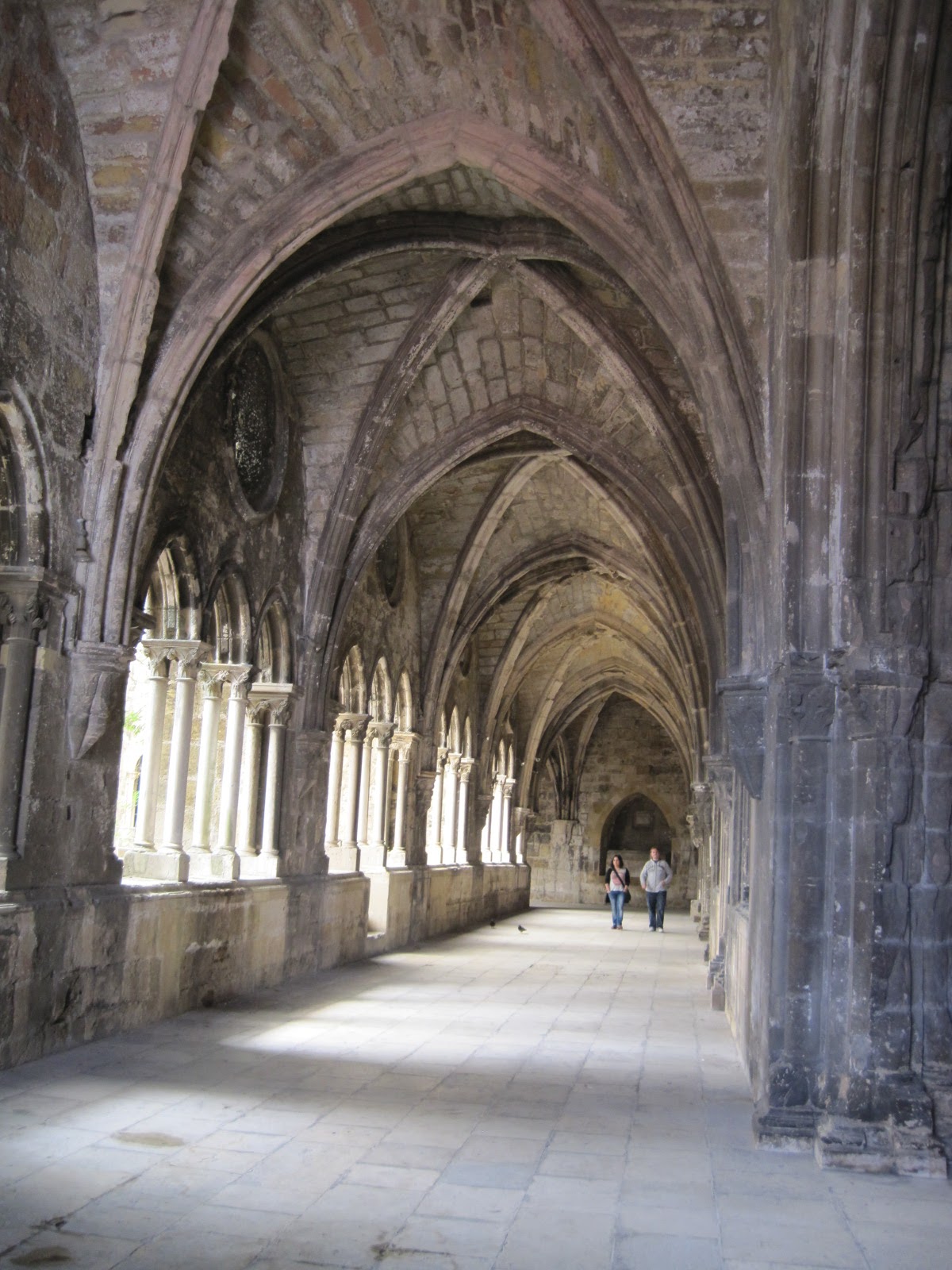
The cloister was my favorite part of the monastery and I could see how this environment could be conducive for a spiritual life. 


Main chapel on Exterior of Mosteiro dos Jeroninmos

Further towards the water is Padrao dos Descobrimentos (Monument to the Discoveries), which pays tribute to the explorers from Portugal's golden age. The structure was completed in 1960 and two of the explorers included are Vasco de Gama and Henry the Navigator.
 
Monument to the Discoveries with 25 de Abril Bridge in the background

A waterfront path leads you to Torre de Belem, which was my last stop on my tour of Belem. These two cows were hanging out in front of a museum along the way. 


Torre de Belem is another example of Manueline architecture. Built in the 1600s, the tower was part of the defensive system. Climbing to the top of the tower proved difficult as it was very crowded with only a single stairway to take people both up and down. I eventually made it to the top though.


I was famished by the time I made it back to central Lisbon. I had only had my two egg custard tarts so far in the day, so I took a walk from my hotel to the Alfama neighborhood for the afternoon. The weather was looking ominous at this point but I was still able to enjoy an al fresco meal before the rain started.

I picked Porta d'Alfama because I had read in a number of places that they have afternoon fado on Saturdays. I was to find that this was not true. Oh well, at least the food was good.

I had an octopus salad and the soup of the day.

Octopus salad from Porta d'Alfama

The soup was a traditional leek soup that I saw in lots of restaurants.


Just as I was finishing my meal, it started to rain, so I quickly snapped some photos of the Alfama area. This small alley was decorated with tinsel for some reason.

Alley in the Alfama

I decided to visit the cathedral (Se de Lisboa) until the weather got better. This is Lisbon's oldest building and dates back to 1150. From the outside you can see two bell towers and the rose window.


Here is how the rose window looks from the inside. 


I also visited the cloisters which as you can see have been undergoing some excavation.


The galleries surrounding the cloisters feature statues and sculptures dedicated to saints. This was one of my favorite pieces that I saw.


The cathedral was not very busy so it was easy to enjoy its tranquility and beauty.


I spent the remainder of my afternoon souvenir shopping. If you ever find yourself in Lisbon, I recommend A Arte da Terra. This shop features only Portuguese-made items and handicrafts so you can be sure you are supporting local artisans and also taking something home that is made in Portugal.

Before heading back to my hotel, I made a quick stop at Eduardino, another ginjinha shop! Saude! This place is supposed to be the most authentic but I couldn't tell you the difference. Maybe it's the plastic cup?


For dinner, I went to Ze Varunca. This is a restaurant that is difficult to just stumble upon because it is off a back street. The restaurant feels very homey and quaint.


One main difference between American and Portuguese meals is that a lot of stuff is brought to your table that you didn't order and which you are charged for if you touch. If you don't touch it, you don't get charged for it. Even bread and butter cost extra. For this meal, I just had bread and my main entree but at other meals, I did eat the appetizers which usually include olives, cured meat or fried things.

Before leaving Portugal, I had to have balcalhau (salted and dried codfish), which is considered the national dish of Portugal. I heard people say there are 365 recipes to prepare balcalhau for each day of the year. It should also be pointed out that codfish is not a local fish, so the national dish is an import!

I had a version that was baked with spinach and cheese. Not my favorite thing in the world but I had to try it.


Casa Pasteis de Belem
Rua de Belem 84
1300-085 Lisbon
Portugal

Porta d'Alfama
Rua de Sao Joao da Praca 17
Largo das Portas do Sol
1100 Lisbon
Portugal

Ginjinha Sem Rival/Eduardino
Rua das Portas de Santo Antao 7
1150-277 Lisbon
Portugal

Ze Varunca
Rua de Sao Jose 54
1150-323 Lisbon
Portugal

You might also like: 
Portugal: Part 1 - Obrigada - only word I learned 
Portugal: Part 3 - Cold and Rainy in Sintra
Portugal: Part 4 - The Rest